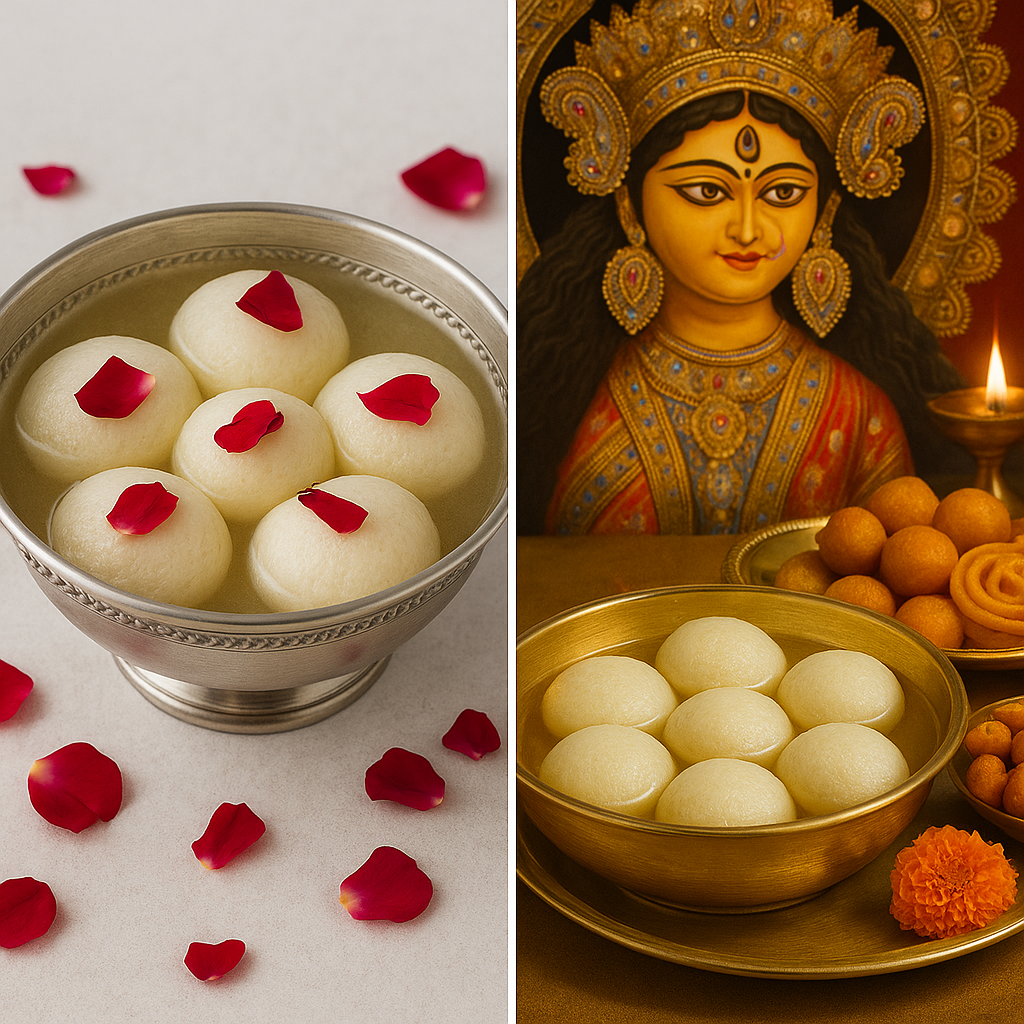
Among all Indian sweets, one dessert stands out for its soft, juicy, and melt-in-mouth texture — the Rasgulla. This iconic white spongy ball, soaked in light sugar syrup, is more than just a sweet treat. It’s a nostalgic memory, a festive favorite, and a symbol of joy.
Originally from Eastern India, especially West Bengal and Odisha, Rasgulla has now won hearts across the country and beyond. But the real magic lies in making this sweet delight at home. In this blog, you’ll discover how to make spongy Rasgulla at home in 5 magical steps. Yes, just five!
Foundation of this sweet
The base of this sweet is made from fresh homemade paneer, also known as chhena in eastern India. Getting the right texture of chhena is the first and most important step.
Ingredients:
1 liter full cream milk
2 tablespoons lemon juice or white vinegar
1 cup chilled water
Method:
Boil the milk in a deep pan.
Once it starts to rise, turn off the heat.
Add lemon juice gradually while stirring gently.
Milk will curdle, separating into chhena and whey.
Strain through a muslin cloth and rinse under cold water to remove the sourness.
Tie the cloth and hang it for 30–40 minutes to drain excess water.
Pro Tip: The chhena should be moist but not watery. If it’s too dry, the sweet will turn hard; if too wet, it will break during cooking.
Once your chhena is ready, it’s time to knead and shape it into smooth, crack-free balls.
Method:
Transfer the chhena to a plate.
Knead with your palm for 8–10 minutes until it becomes soft, smooth, and slightly greasy.
Divide into small equal portions and roll into balls.
Make sure there are no cracks in the balls. They should be smooth, soft, and evenly sized.
Why it matters: This step determines the final sponginess. Kneading activates the fat in the chhena, helping the sweet stay intact and soft during boiling.
🍯 Step 3: Prepare the Perfect Sugar Syrup
The sweet gets its sweetness and moisture from the sugar syrup or chashni. It needs to be light and watery — not thick like for other sweets.
Ingredients:
1.5 cups sugar
4 cups water
2–3 cardamom pods (optional)
Few drops of rose water or kewra essence (optional)
Method:
In a deep, wide pan, mix sugar and water.
Boil until the sugar dissolves completely.
Remove any foam or impurities from the surface.
Add optional flavorings like cardamom or rose water.
Pro Tip: Keep the syrup slightly simmering when adding the sweet balls. It should not be too hot or too cold.
This is the heart of the recipe – boiling the sweet balls in sugar syrup. This is where your efforts finally start to take shape.
Method:
Gently drop the sweet balls one by one into the boiling syrup.
Cover the lid and cook on medium flame for 15–18 minutes.
Open the lid every 5 minutes and stir gently, so they cook evenly.
You’ll notice the sweet balls start to double in size!
Note: Make sure the pan is wide enough to allow space for expansion. Overcrowding can lead to flattened Rasgullas.
Pro Tip: Use a pressure cooker with the whistle removed, or any tightly closed lid to trap the steam and create even heat.
❄️ Step 5: Cool and Soak for Juiciness
Once the Rasgullas are fully cooked, don’t serve them immediately. They need time to absorb sweetness and cool down.
Method:
Remove the Rasgullas from the hot syrup and dip them in plain cold water for 5–10 minutes.
Then transfer them back to cooled sugar syrup.
Chill in the refrigerator for 3–4 hours before serving.
This cooling and soaking step ensures that each Rasgulla becomes juicy and light, soaking up the syrup beautifully.
🎁 Bonus Tips for Spongy, Soft Rasgulla Every Time
Always use full cream milk for richer and softer chhena.
Kneading is key – Don’t over-knead or under-knead.
Use light syrup – Thick syrup prevents absorption.
Maintain even boiling – Rasgullas puff best under consistent heat.
Let them rest – The more they soak, the softer they get!
Once you’ve mastered the basic Rasgulla, you can get creative with flavors:
Saffron flavor – Infuse syrup with kesar for a golden hue.
Mango flavor – Add mango pulp to syrup or chhena.
Rose flavor – Add rose syrup and edible rose petals.
Chocolate flavor – Serve with chocolate syrup for a fusion dessert.
🎉 Rasgulla and Indian Festivities
Whether it’s Durga Puja, Diwali, Rakhi, or even a wedding, this sweet always finds a place on the sweet menu. Its delicate look and juicy bite make it a guest favorite.
In fact, in Bengal, no celebration is complete without a bowl of chilled Rasgullas. It’s not just a dessert – it’s a symbol of celebration!
🕰️ History & Cultural Angle of Rasgulla – A Sweet Tug of War!
 Where Did this sweet Come From?
The sweet, also known as Rosogolla in Bengali, is not just a sweet – it’s a symbol of pride, emotion, and even state rivalry! For decades, a debate has raged over the origin of this sweet – did it come from West Bengal or Odisha?
 Odisha’s Claim – 12th Century Temple Offering
Odisha claims that Rasgulla originated in the Jagannath Temple, Puri, as early as the 12th century.
Locally known as “Khira Mohana”, it was offered to Goddess Lakshmi as part of Rath Yatra rituals.
The sweet was made using fresh chhena and soaked in syrup – very similar to today’s Rasgulla.
In fact, Odisha celebrates “Rasagola Dibasa” (Rasgulla Day) after Rath Yatra to honor this tradition.
Bengal’s Claim – Invention in the 19th Century
West Bengal credits Nobin Chandra Das, a famous Bengali sweetmaker from Kolkata, with “inventing” Rasgulla in 1868.
He was the first to make spongy Rasgullas using chhena and light sugar syrup that didn’t spoil easily.
His son K.C. Das later canned it and popularized Rasgulla globally.
In Bengal, Rasgulla is considered a household gem, served during all festivals and celebrations.
 The GI Tag Battle – Odisha vs. Bengal
In 2015, West Bengal received the GI (Geographical Indication) tag for “Banglar Rasogolla”, recognizing it as a product of Bengal.
In 2019, Odisha too received a separate GI tag for “Odisha Rasagola” – acknowledging the distinct tradition and preparation in Jagannath Temple rituals.
So today, both states have their own unique Rasgulla identity!
 Cultural Significance – More Than Just a Sweet
Rasgulla is offered to guests as a welcome treat.
It is an integral part of Durga Puja, Rath Yatra, and Bengali weddings.
For many, Rasgulla is a symbol of happiness, shared during success, celebrations, or homecomings.
 Fun Fact:
In 2017, Odisha Rasagola was included in the Chhappan Bhog (56 offerings) at Jagannath Temple after historical evidence proved its ancient use in rituals.
 Final Thought – One Rasgulla, Two Histories, Infinite Love
Whether it’s from Puri’s sacred rituals or Kolkata’s sweet shops, Rasgulla is one dessert that unites India in its love for sweets. Its juicy center may be debated, but the emotion is shared by all.
So next time you enjoy a Rasgulla, remember — you’re biting into centuries of culture and a whole lot of sweet history!
❤️ Conclusion – A Homemade Rasgulla is Pure Love
Nothing compares to the joy of biting into a soft, juicy, homemade Rasgulla. When made with love and care, these delightful sweets become more than food — they become cherished memories.
Follow these 5 magical steps and your kitchen will soon fill with the aroma of warm syrup and soft chhena, transforming into Rasgullas that melt in your mouth.
Once you’ve made your first batch, you’ll never go back to store-bought again!

 Introduction – A Sweet Cloud of Joy!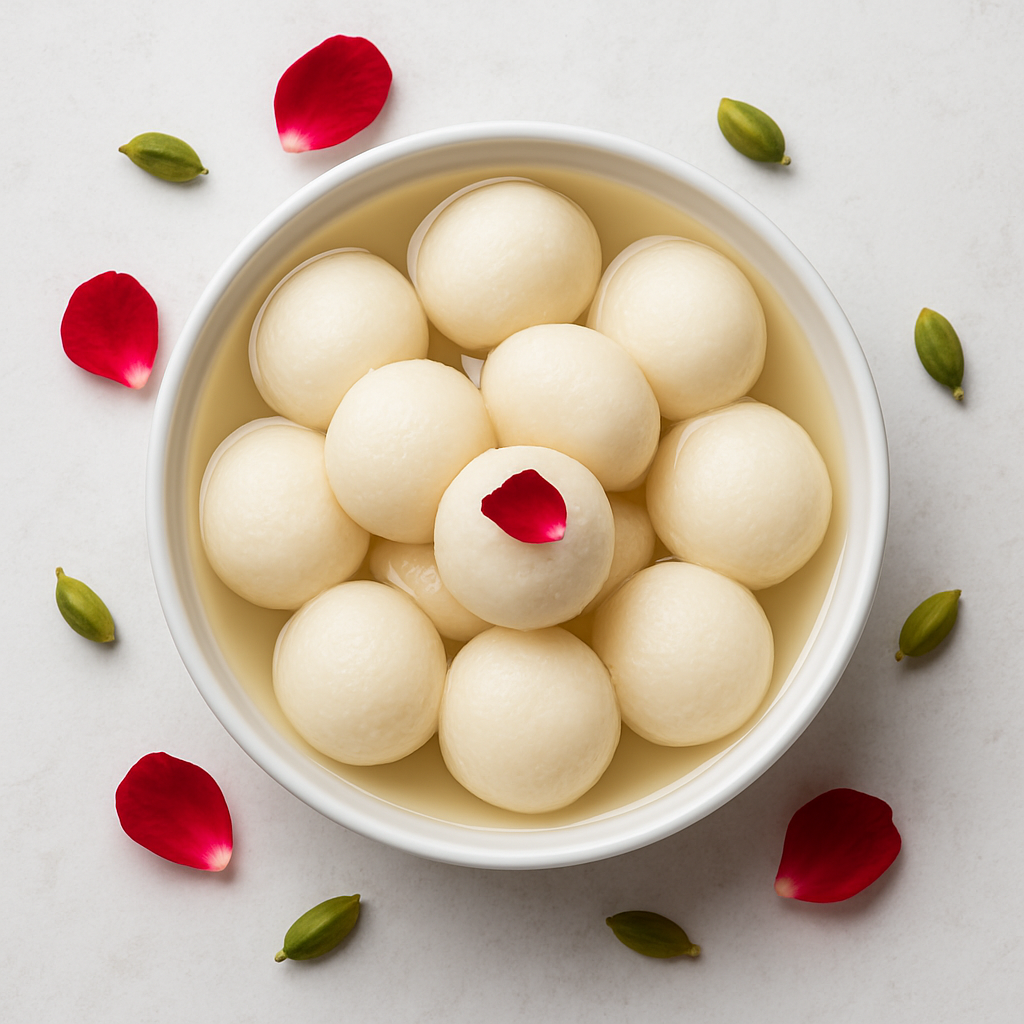
 Step 1: Make the Perfect Chhena – This sweet Foundation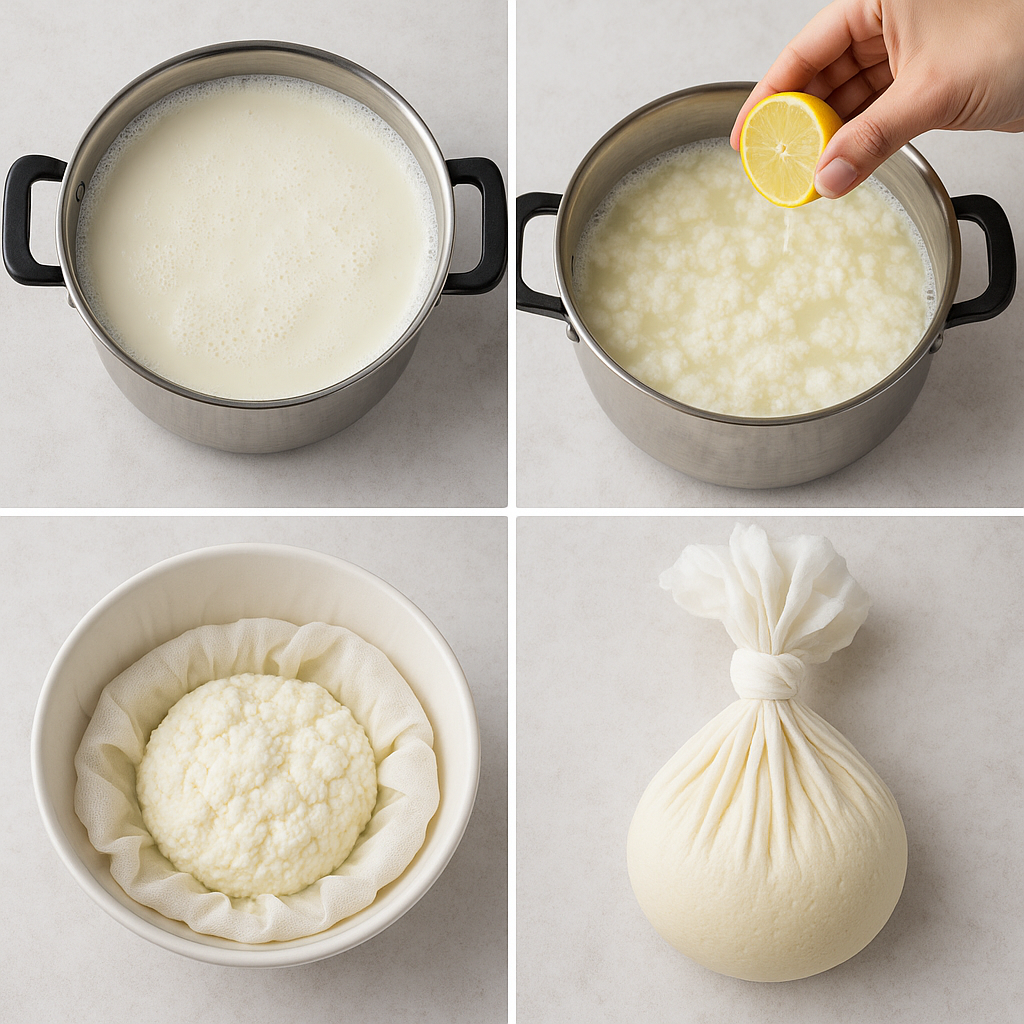
 Step 2: Knead and Roll Smooth sweet's Balls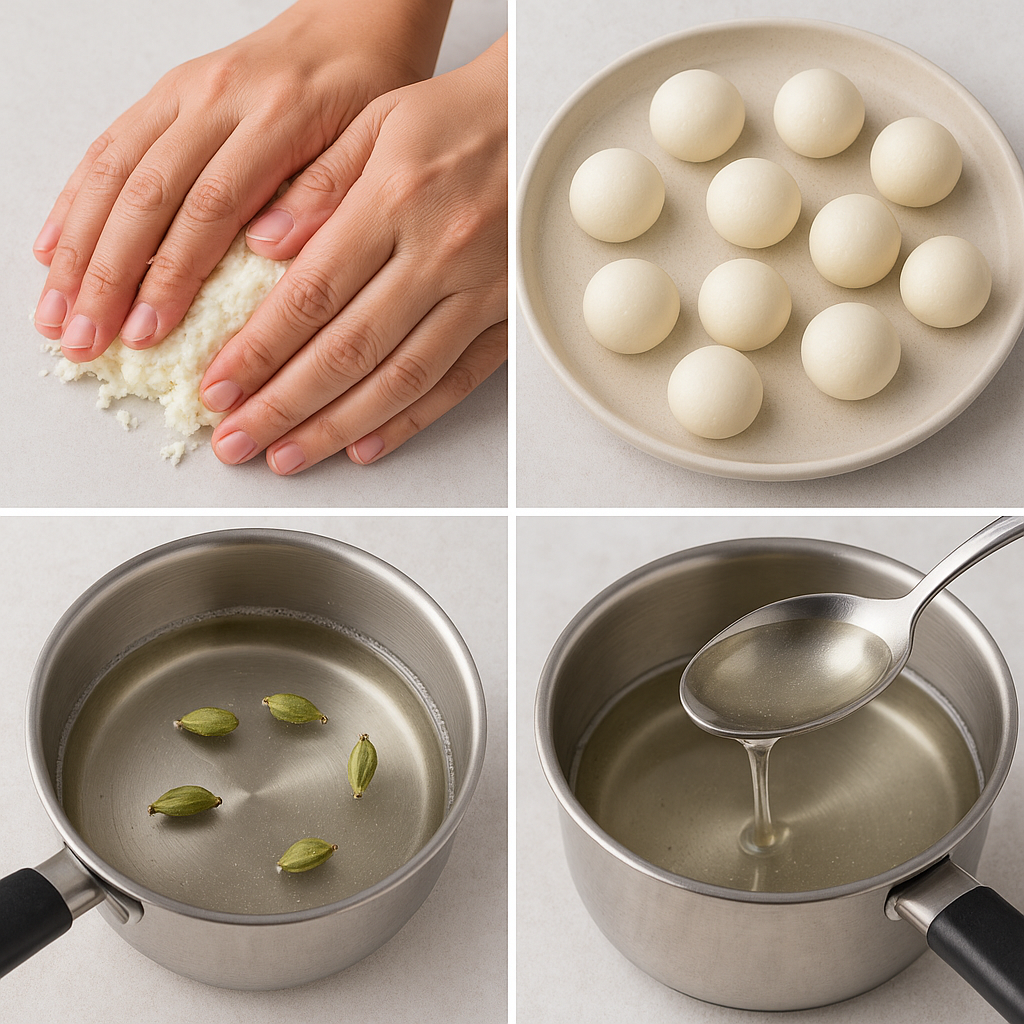
 Step 4: Cook the sweet balls– The Magic Moment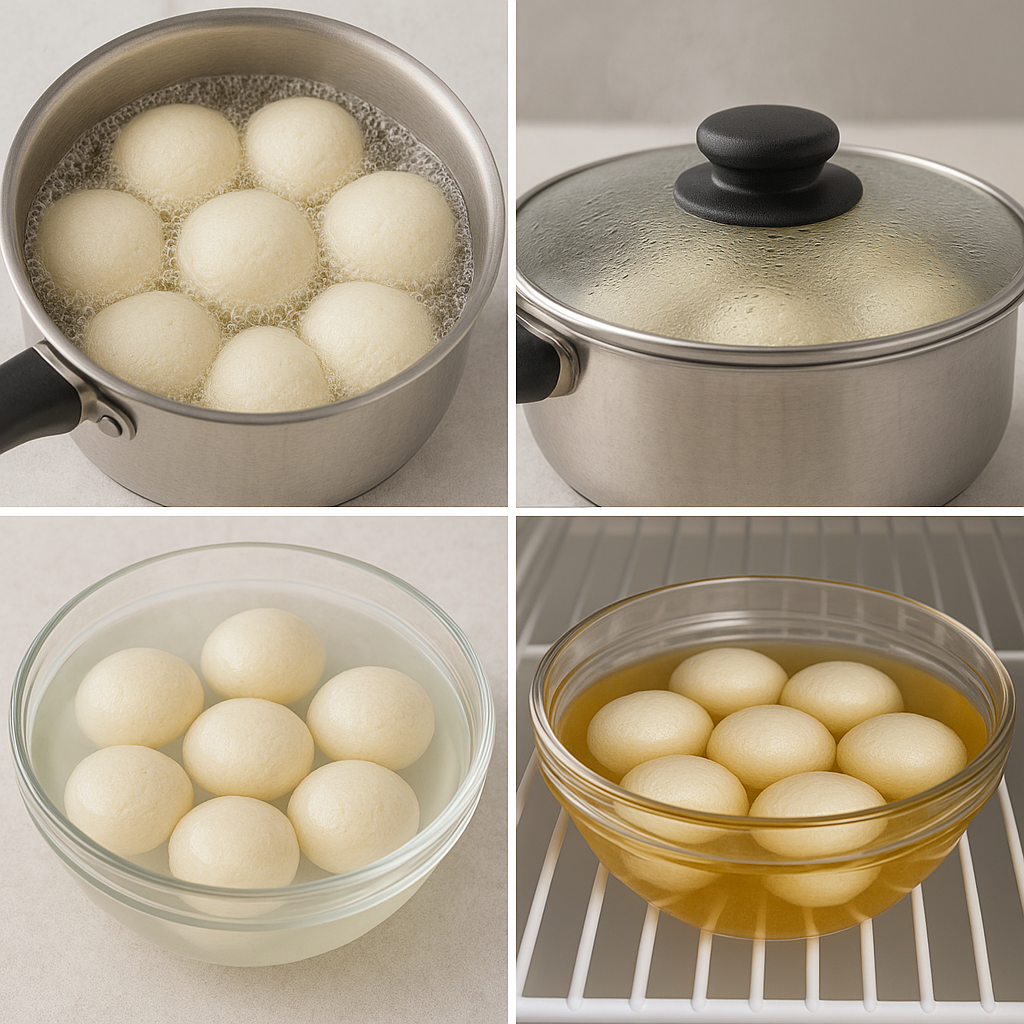
 Variations of This Sweet – A Flavorful Twist